

Asturian culture and language · Essay
What linguistic normalization means for Asturian
July 12, 2026 · 2 min read
Linguistic normalization is the process by which Asturian moved from oral use with no shared standard to a language with its own spelling, grammar and institutional use, begun in 1980 by the ALLA.
Definition
Linguistic normalization is the technical term for the process by which a language with no shared written standard develops a reference spelling, grammar and lexicon, along with progressive institutional use. It is not the same as the language simply “existing” — Asturian existed well before 1980 — but rather its standardization and institutionalization.
The starting point, 1980
The normalization process for Asturian formally began in 1980, with the establishment of the ALLA (Academia de la Llingua Asturiana) as the sole normative authority. Before that date, Asturian had wide dialectal variation but no shared written reference standard.
Stages of the process
1. Fixing spelling and grammar
The ALLA’s first task was to establish a common orthographic and grammatical standard, capable of covering Asturian’s dialectal variety without erasing it.
2. Lexicographic production
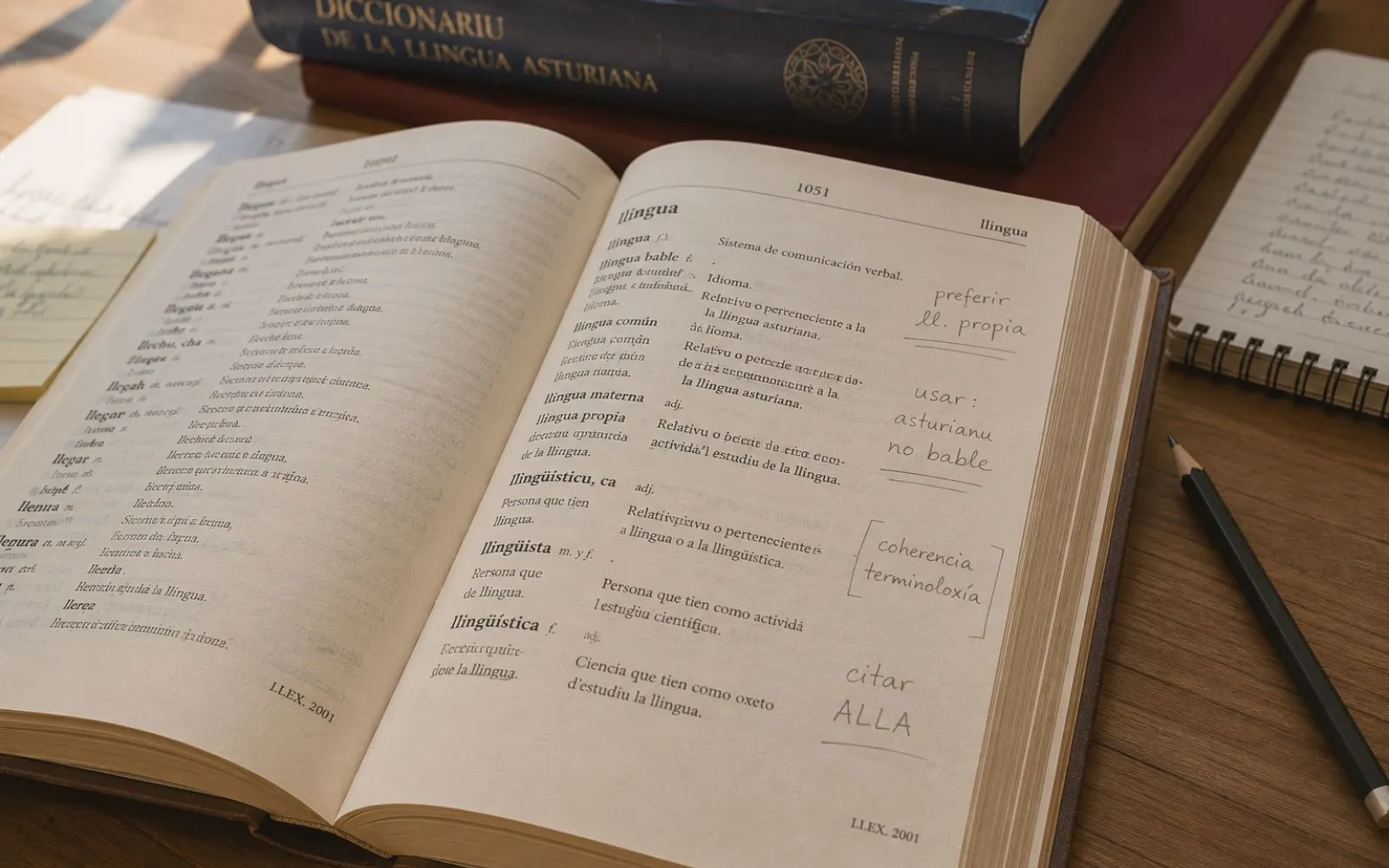
With the standard fixed, the ALLA drove reference works, including the Diccionariu de la Llingua Asturiana.
3. Entry into education
Asturian gradually entered the Asturian education system as a subject, giving the language its first systematic institutional space.
4. Growing institutional use
Since then, the use of Asturian has been gaining ground in administration, media and public life, without, however, reaching official status.
Where the process stands today
Linguistic normalization is not an endpoint but an ongoing process. More than forty years after it began, Asturian has a consolidated standard, active lexicographic output and a presence in education, but the step most normalized languages in Spain have already taken — co-official status — remains pending.
The 2017 sociolinguistic survey is the tool that allows this process to be measured with data: the 62% of the population who understand or speak Asturian is both a result and evidence of the path travelled since 1980.
Bibliography
The normative and institutional sources this article relies on:
- Academia de la Llingua Asturiana. Diccionariu de la Llingua Asturiana. https://alladixital.org
- Academia de la Llingua Asturiana. L’Academia de la Llingua Asturiana. https://alladixital.org
- Academia de la Llingua Asturiana. III Estudiu Sociollingüísticu d’Asturies. https://alladixital.org