A musician who also researches
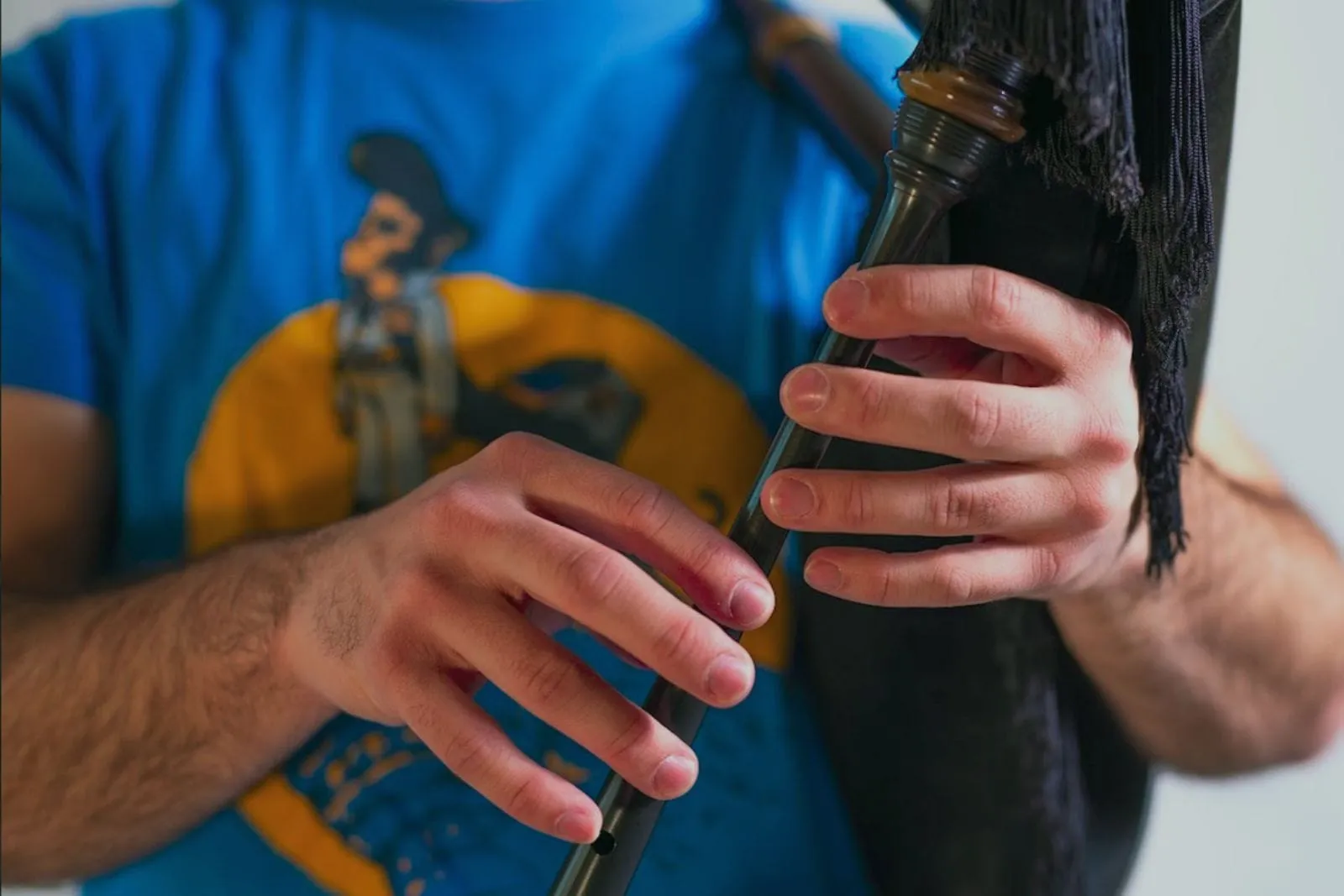
Tever isn't just a gaita performer: he's a musician who researches, teaches
and composes from deep knowledge of the instrument he plays. This triple
condition — performer, researcher, teacher — shapes tever.es, a site that
doesn't just list concerts, but covers the whole body of work behind the
Asturian gaita: where it comes from, how it sounds today, and where it can
be taken.
The site organises this work into three feeding-into-each-other fields:
live performance, ethnomusicological research into Asturian sonic
heritage, and teaching the gaita to new generations. None of them is
secondary to the others — research informs what gets played, teaching
requires understanding what's taught from its roots, and performance is the
practical test of all of it in front of an audience.
"Advancing from tradition": not world-music fusion
tever.es's own presentation draws a clear line worth explaining: the project
doesn't define itself as "world music" or "folk fusion", two labels commonly
applied to any project working with traditional instruments. The idea
guiding Tever's work is different: advancing from tradition, not
abandoning it or diluting it into a generic "world music" genre.
This means the starting point is always the Asturian gaita's repertoire and
technique as transmitted across generations, and any evolution — new
arrangements, new instrumental combinations, original composition — builds
on that knowledge rather than replacing it. It's a fine but important
distinction for anyone approaching the project expecting "generic folk
fusion": what they'll find is something more rooted and, at the same time,
more specific.
The Atlantic arc as a frame of reference
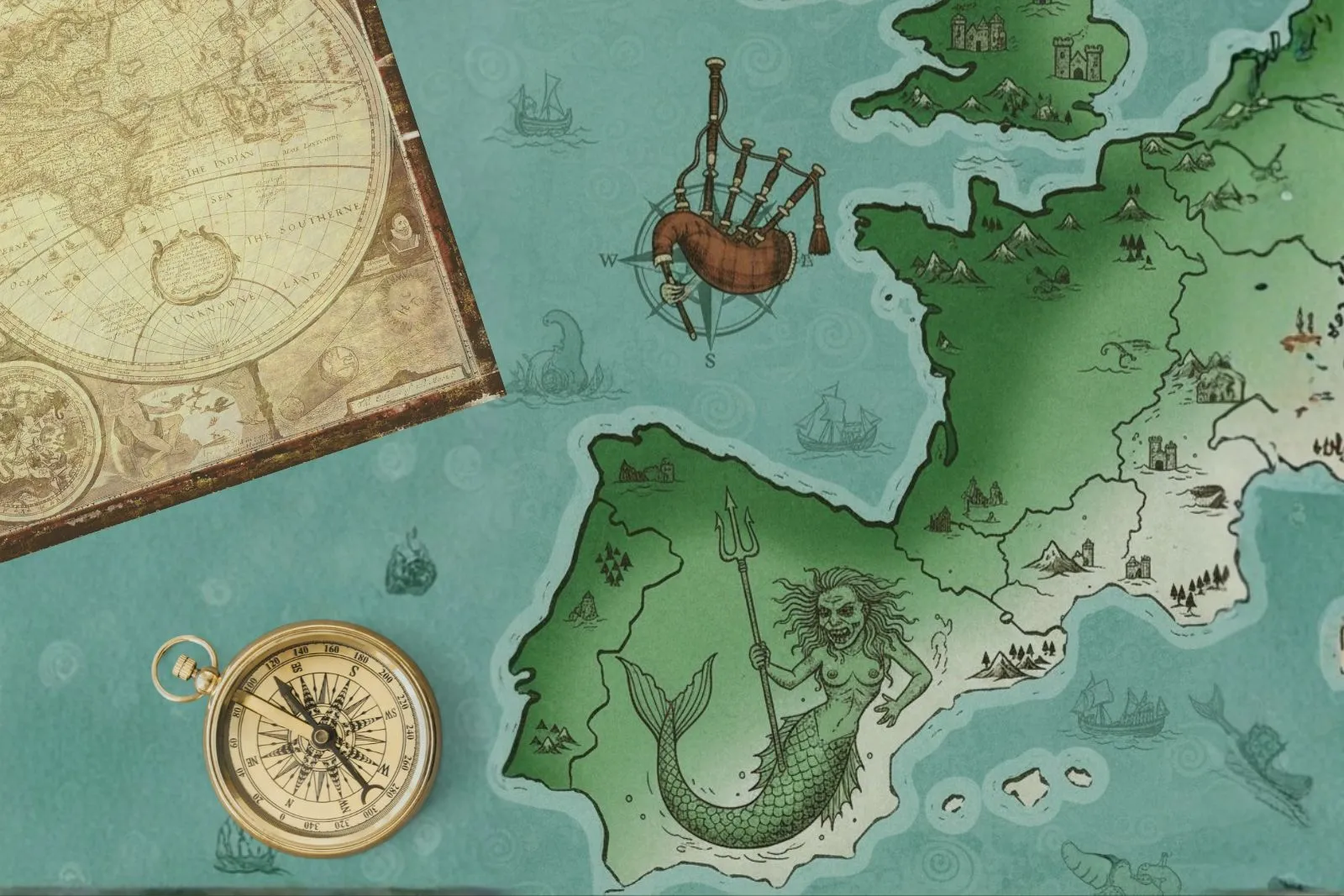
One of tever.es's most distinctive research threads is comparing the
Asturian gaita with other bagpipe traditions of the European Atlantic
arc — Galicia, Brittany, Scotland, Ireland, and other bagpipe traditions
from the northern Iberian peninsula and the British Isles. It's not a
touristy or decorative comparison: it's genuine ethnomusicological work that
seeks to understand what the Asturian gaita shares with its historical
neighbours and what makes it distinct — tuning, fingering, repertoire,
social context of performance.
This comparative work connects tever.es to a broader tradition of European
bagpipe music studies, and helps dismantle the simplified idea that "it's
all the same" across different bagpipe families. Each tradition has its own
internal logic, and that logic is precisely what Tever researches and
documents.
The blog: etymology, construction and gaita-making
Beyond the concert calendar, tever.es keeps a blog with essays on
specific topics that offer real knowledge — not generic music-marketing
posts. Topics covered include the etymology of the word "gaita" and its
lexical relatives in neighbouring languages, the physical construction
of the instrument — bag, chanter, drones, reeds — and the technical
decisions involved in building a correctly-tuned gaita, plus specific
comparisons with other bagpipe traditions of the Atlantic arc.
This blog serves a purpose a simple concert calendar couldn't: it leaves a
written, documented, searchable record of the knowledge Tever has built up
as a performer and researcher. It's content that keeps its value years after
publication, independent of any single concert's news cycle — the kind of
"evergreen" content that justifies tever.es being more than a digital
business card.
An EP that's a starting point, not a final destination
"Suañu de Gaita" (2021) is Tever's first record release, and tever.es
presents it explicitly as exactly that: a starting point. It's not a closed
concept album, it's the first stone of an artistic path still being built —
consistent with the "advancing from tradition" approach that runs through
the whole project: you don't "arrive" at a fixed style, you keep working
forward from the traditional base.
Two live formats: solo and ensemble
Tever offers his live work in two clearly distinct formats, built for
different contexts. The solo format works for more intimate spaces or
for educational-style presentations, where direct engagement with the
audience and explaining the instrument matter as much as the music itself.
The ensemble format expands the sound for larger-scale concerts, where
the gaita is set within a bigger group.
This dual offering reflects the same triple identity running through the
whole project: a solo concert carries a strong teaching component —
explaining the instrument, its history, its technique — while an ensemble
concert prioritises the collective musical experience. These aren't two
separate businesses, they're two ways of presenting the same underlying
work.
Teaching: the gaita as a craft passed on
Teaching isn't an afterthought in Tever's work — it's one of the project's
three declared pillars. The Asturian gaita, like any orally-transmitted
instrument, depends on those who know how to play it passing it on to
others — there's no way to sustain a living tradition without that
generational handover. This teaching dimension is also where
ethnomusicological research pays off most directly: it's not just about
teaching notes, it's about teaching the instrument's historical and
technical context.
Why this feature
Like asturianu.org and La Vieya Asturies, tever.es is one of the three
real entities in Xiringase's editorial catalogue — a project that lives
outside the main domain but is part of the same Asturian cultural root.
This feature gathers what the home page's short card can't: the full
context of a project that is, at once, musical performance,
ethnomusicological research and teaching — three fields that only make
full sense together.